
New ‘Coworkers in the Vineyard’: the Next Generation of Lay Ministers

A feature article in the September issue of U.S. Catholic highlights a recent and ongoing trend regarding an emerging generation of new lay ministers coming to the Church. Those lay men and women educated and formed in the 1970s and 80s are now reaching retirement age (as are many of their ordained counterparts). Couple that with a strong desire on the part of many Millennial Catholics (and colleagues of other denominations) to live a life of meaningful service, graduate programs and training opportunities are drawing many young adults.

Mark S. Markuly, Dean of Seattle University’s School of Theology, told the magazine that many of the young people entering graduate theological programs today want to address social problems in the world:
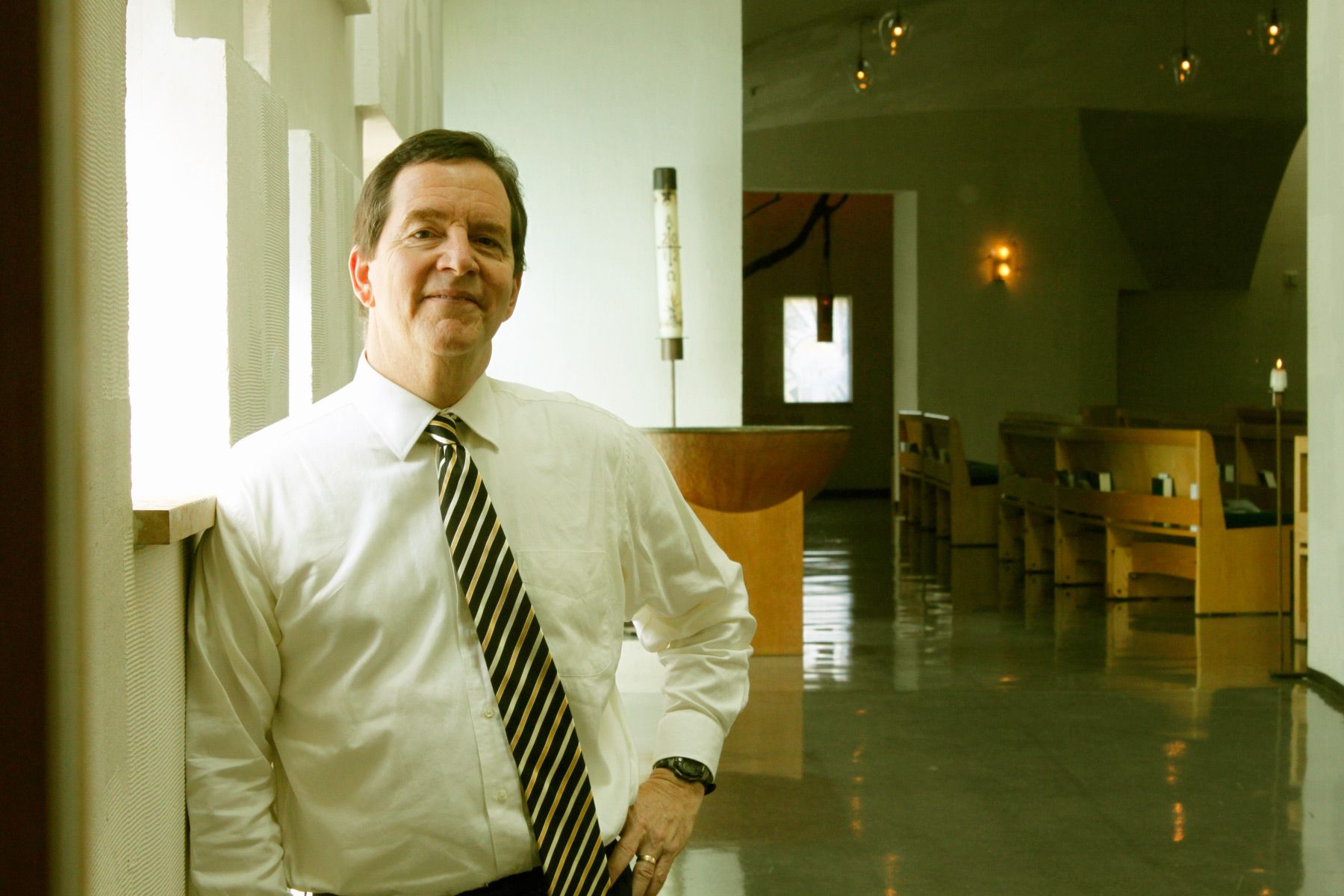
markmarkuly
Mark S. Markuly

“They’re asking questions about where the church needs to grow in reaching people and they’re kind of imagining how they might be on the cutting edge of trying to do that,” Markuly says. “In very real ways, they’re asking some of the same questions that Pope Francis is asking: How do we get out to the periphery?”

And, those new ministers note that such a life must be driven by a deep sense of call, as ministry requires many sacrifices of time and potential non-ministry income.

“When the rubber hits the road, if you have kids and a family and a house to pay for, it’s very challenging,” Jennifer Ibach, a part-time pastoral assistant in West Seattle told the magazine. “You have to really feel called to it and you have to have it nurtured by other people.”

The full article can be found on the U.S. Catholic website.

Editor

Katharine E. Harmon, Ph.D., edits the blog, Pray Tell: Worship, Wit & Wisdom.

Please leave a reply.

Comments

12 responses to “New ‘Coworkers in the Vineyard’: the Next Generation of Lay Ministers”

  1. Jim Pauwels

    Some astute comments in that article about the challenge of being a young adult on a parish staff whose other members are mostly one’s parents’ age. I hope it challenges pastors (most of whom are not young men) to consider seriously the energy and creativity of younger-generation parish ministers when they are filling open positions on their staff.

    Also interesting that parishes aren’t perceived as being as exciting as campus ministry or something entrepreneurial. I suppose parish employment offers stability and predictability, more so than the chance to be creative, and maybe young adult ministers have an appetite for the creativity and risk, but as they grow older, they find a need for the stability of parish ministry.

    The church’s bias toward older ministers is the inverse of what I’ve seen in the business world throughout my career, in which employers prefer younger workers who will accept lower wages, can work longer hours, are more willing to travel and relocate and have more up-to-date training and skills.

  2. Rick Reed

    “I suppose parish employment offers stability and predictability”…

    Not at all. Most parishes do not allow their employees to have contracts. Many parishes, the employees work at the whim of the pastor. A new pastor can come in and totally clean out the office and start with a new fresh staff. There’s very little about working for a Catholic parish that encompasses stability and predictability, other then the job could disappear at a moment’s notice. That could be something the bishops could address at some point soon.

    In some dioceses, they do have a policy that when the pastor changes, no personnel changes can be made for a period of time. Unfortunately, in nearly all dioceses that I’m aware of, there is no stability or protection for perish employees. In many cases, the income is not enough to support the family. There is the assumption that the employee is the second job in the family and not the primary source of income supporting the family.

    Parish employees have to be willing to live and work at a very austere level, unless they have a spouse or other family member making the “real” money.

  3. Rod James

    I agree about the instability of parish work. We serve at the convenience of the priests, and it is their way or the highway. I often find myself doing things I know won’t work because the priest insists on it and won’t consider other ideas, even if they are coming from people hired because of their expertise. I enjoy parish work, but it is extremely frustrating dealing with some of these guys.

  4. Similar to others re parish work, I love my job, but I have no illusion of stability and thank goodness for my husband’s “real job.” That said, if I lost my job we would be challenged, and if he lost… I can’t even finish the sentence. This salary is not going to cover us all.

    On the topic of who is the next generation, I have some observations. We do have a graduate school in this diocese (Albany), St. Bernard’s School of Theology and MInistry, an extension campus of the main Rochester site. There are between 50 and 60 adults currently pursuing masters degrees; I am a 2013 graduate. Many of us are “older,” I am 57, for example, and a career switcher. There are a lot of retired people in our program, many of them around my age, but there are younger people present as well. This diocese also has an outstanding lay ministry formation certification program, the Kateri Institute, with a broader mix of ages, I believe.

    Even with all of this, I have to wonder where it is all headed, as I watch parish after parish either merge (fewer jobs) or cut full time work to part time. And for the needs of the parish, so many now handled by older lay ministers who are retired and do it on a volunteer basis… who will replace them? That is a bigger question if you ask me.

  5. Jim Pauwels

    Rick and Rod – you’re right that parish employees are serving at the pleasure of the pastor. I suppose this is not much different than many/most jobs in the secular job market, which are “at-will” employment.

    In my diocese (Chicago), pastors serve six-year terms, with two terms being the usual upper limit (although some exceptions are made and some pastors’ tenures are longer). So if you are a lay employee who finds a good situation with a pastor with whom you have a good relationship, you can reasonably expect 6-12 years of stable employment. That is not the same as a lifetime guarantee – but as I say, those of us who work in the corporate world are bearing similar risks.

    And compare that prospect with, say, a position directing a food pantry that relies on grants to keep its doors open. That position may be year-to-year, or even less stable.

  6. Philip Spaeth

    Income is definitely the biggest hindrance here. I have been employed in parish ministry for 13 years, since my early 20’s, and I completely love what I do. I am now working for the third pastor at the same parish since the one who hired me, and I feel it has been and continues to be a blessing to work for these wonderful priests (obviously a different experience from previous commenters). But, being that I have young children, my “full-time” salary simply cannot pay the bills on its own, even when we add in additional stipends for weddings/funerals. Therefore, I am always looking for additional part-time income, such as teaching piano, directing other choirs, and occasionally actually getting paid to write some music (very rare, despite the fact that this is what my degree is in!). My wife does have a professional life outside the home, although it does not, at this point, come with an income. As is the experience with many in my generation and younger, if one does what one loves, one lives on the edge financially. I know that I am much appreciated by my parish, and they have truly become family for us. I also know that the sacrifices we make will be understood by my children, and will be good for our souls. I am not convinced that they are good for my cardiovascular system, however!

    I also think that my generation and younger, although hungry for this type of “service to the periphery,” have found ourselves entering an economic climate that is just not favorable to this type of work. Don’t get me wrong… it *should* be hard. It *should* contain an element of sacrificial giving. It should not, however, require one to take a vow of poverty on behalf of one’s children. OK… that’s overstating a bit, but it feels like it gets close sometimes!

    All of this being said, if I were to be asked by a Millennial what I think they should do, I would, without hesitation, say, “Take the leap.”

  7. Philip: “I also think that my generation and younger, although hungry for this type of “service to the periphery,” have found ourselves entering an economic climate that is just not favorable to this type of work.

    Well, as a trainee academic I can give this advice. I’ve found that having a diverse range of amateur and professional abilities not only provides some job protection but also enriches a person’s main field of expertise. For example, I’m a liturgical Latinist who enjoys Linux programming in his spare time. I don’t expect anyone to stop me on the street and ask for advice on bash coding. Still I’m interested in combining the two interests (online education?) Weave all interests together.

  8. Alan Johnson

    This is in its infancy in the UK. There was a bit of a messy start where a couple of parishes employed lay people ho were then sacked by an incoming priest. I believe lawyers and tribunals became involved. Yet there is no shortage of skilled retired people willing to volunteer. Many parishes flourish because of such folk especially where the pastor is man enough to encourage lay participation – sadly not a given.
    It does rather raise the question of whether a shortage of priests is actually a good enough reason to close a parish. That seems to be the most commony given reason.

  9. Philip Spaeth

    Excellent advice, Jordan. This is essentially how we have “survived,” albeit with all of those interests being musical on my part! I am sure I can find more creative means of combining these interests, as you suggest, so as not to be spread so thin and still remain as dedicated to ministry. ISTM the key these days is never to stop learning, and that is not a bad thing! I think Millenials fundamentally understand this better than those like myself who are at the tail end of the “generation X” category. These days, even when one has good, steady employment, in ministry or otherwise, one has to have something of an entrepreneurial spirit. My college composition professor always said, “You can write the best music in the world, but you still have to get people to play it!”. There’s an analogy to the New Evangelization somewhere in there…

  10. Steve Kusterer

    From what I’ve seen, the church’s call for a “living wage” does not always seem to be applied at the parish level. It seems at times parishes are taking advantage of people wanting to do this type of work, and pay them less than a living wage knowing that they may not have much choice but to accept it if they want to do that work.

  11. Scott Pluff

    The sad state of lay salaries in many (though not all) Catholic parishes is related to the sad state of stewardship. The answer is not to put on more fundraisers (dinners, dances, picnics, raffles, car washes, etc.) but to grow givers. Educate people on what God says about money. Hint: it’s not gimme-gimme-gimme, mine-mine-mine! If you can bring a parish around to thinking about how their personal finances are connected to their discipleship, you may get them to start giving more than a few coins here and there. But not if you keep hitting them up every week for another fundraiser or another second collection.

    1. Steve Kusterer

      @Scott Pluff – comment #11:
      I think the sad state of stewardship is not purely caused by a lack of education. I think the various public scandals within the church and settlements that have come to light have caused some people to withhold or reduce their contributions.

      In other cases I know of people who have withheld or decreased their contributions because their parish decided to build an expensive new church that comes across as a tribute to the reform-of-the-reform, yet the same parish won’t pay living wages and remains what has been referred to as “self-referential” in most ways.


by

Tags:

Discover more from Home

Subscribe now to keep reading and get access to the full archive.

Continue reading